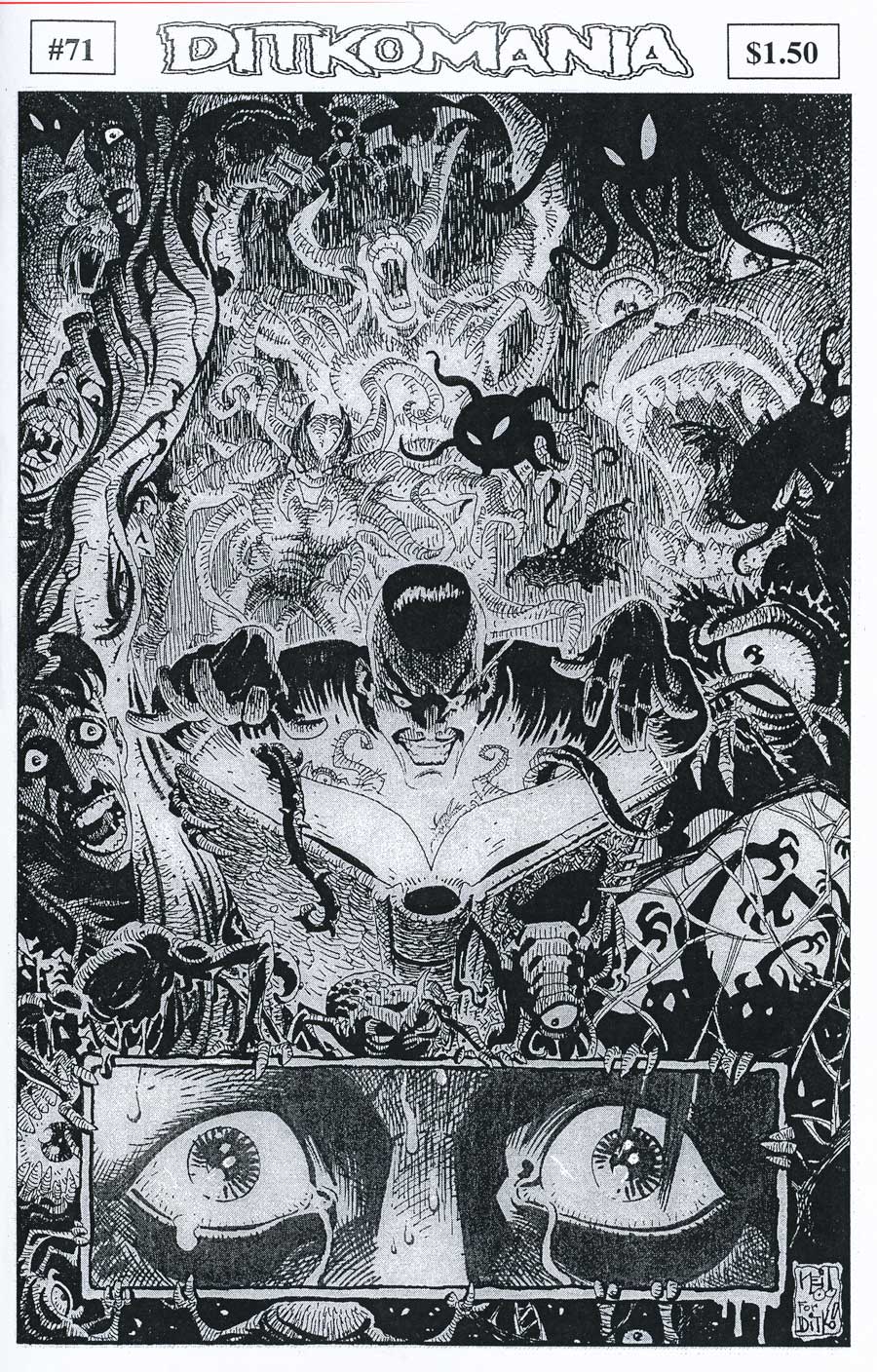
I believe the book does come with some prejudices and presumptions. For example, Ditko is described by Morrow as a "talented artist", disregarding the fact that Ditko was a writer for most of the last fifty years (at least), personally authoring his most important published work during that time. When pages from the Disney Legends program book are reproduced, no mention is made of Kirby being a writer (before, during or after his work at Marvel) - an outrageous designation that gets no pushback from Morrow. Little to no mention is made in Stuf' Said of the plethora of comics Kirby wrote before the Marvel age. Likewise, the same Disney book states that Lee "dreamed up an endless number of new characters and worlds", a boast that is demonstrably untrue. The best evidence to decide the verdict Morrow could have presented (but didn't) is Dr. Michael J. Vassallo's definitive essay detailing everything Lee wrote before he teamed up with Kirby (and Ditko): "Stan Lee (1922-2018) - The Timely Years". It's a damning document that makes clear Lee did not create the cosmic concepts Kirby had already been creating since the early '40s (if not earlier). https://timely-atlas-comics.blogspot.com/2018/12/stan-lee-1922-2018-timely-years.html
Lastly, the book's cover, with psychedelic Captain Victory art blown up out of context and covered with large digital fonts, is ugly. While conveying some of the anger expressed by Kirby, the cover could have looked more welcoming and it's noteworthy that nowhere is the book's designer listed.

Loaded with copious footnotes, the book covers decades of Kirby being outspoken on his contributions. Because the scope of the book mainly covers what Kirby said, some evidence which would help confirm his beliefs isn't covered: Dr. Michael Vassallo's extensively researched chronological analysis of Stan Lee scripts, for example, shows conclusively that Lee's "creativity" began when Kirby rejoined Marvel in the late '50s, and mysteriously left Lee when Kirby quit Marvel for DC in 1970. Conversely, the book deals little with Lee's distinctive 1960s voice which, whether one enjoys it or not, was highly instrumental in creating a new jovial and audience-connecting informality in comics (compared to DC's straight-laced and patronizing editorial voice), but which is, again, outside the scope of this book.
The incident of Lee rejecting a Kirby Hulk story and the resultant output of Kirby in the month of March, 1963, is a fascinating connection and a new avenue to explore in the complex story of these two creators.